BPW Europe
Cooperations
Here you find an overview of cooperations of BPW Europe.
Here you find an overview of cooperations of BPW Europe.
At BPW Europe, collaboration is not a function—it is a strategy for impact. Our partnerships extend across institutions, organisations, and global networks, creating a powerful ecosystem that amplifies the voice, influence, and advancement of women across Europe and beyond.
Through strategic cooperations, BPW Europe actively engages with policymakers, international bodies, and like-minded organisations to shape dialogue, influence frameworks, and drive meaningful progress in areas that matter—from gender equality and economic empowerment to leadership representation and social innovation.
These collaborations are built on shared values and a collective ambition: to create sustainable change through aligned action. By working alongside key stakeholders, we ensure that our initiatives are not only relevant, but impactful—bridging the gap between policy and practice, and turning vision into measurable outcomes.
Our strength lies in connection. Our impact is driven through partnership. Our future is built together.
BPW Europe is represented in the Board of Administration of the European Women’s Lobby. Our BPW Europe Representative are Miette Dechelle and Pille Tsopp-Pagan.
As a non-government organization (NOO), BPW International has Consultative Status, Category 1, with the United Nations Economic and Social Council (ECOSOC). It also has consultative status and special relations with the International Labor Office (ILO), the United Nations Educational, Scientific and Cultural Organization (UNESCO), the United Nations Industrial Development Organization (UNIDO), the United Nations Conference on Trade and Development (UNCTAD), the World Health Organization (WHO), United Nations Children’s Fund (UNICEF) and the Food and Agriculture Organization (FAO).
BPW International has permanent representatives at the United Nations and its agencies in New York, Geneva, Paris and Vienna. These representatives keep BPWI affiliates informed of UN activities and represent their views during meetings, particularly on issues relating to women’s status.
BPW International is actively involved in the INSTRAW Women’s Training Centre, UNlFEM, Project 5-0 International, the ILO Training Centre, Women’s World Banking and over 50 other on-going projects around the world.
BPW International has played a major role in all four World Conferences for Women from 1975 to 1995. In addition, it has sponsored, co-sponsored and participated in regional meetings which have included training seminars, workshops, conferences and trade fairs.
Since 1975 the Commission on Status of Women (CSW) of the United Nations met in New-York, during two weeks in February/March. At this occasion, numerous Non Governmental Organisations join New-York for the CSW NGO Forum that organise parallel events, as conferences or panel discussions. As example in the 56th CSW session of 2012 : 618 organisations and 4300 delegates accredited, 300 side events.
Around 100 BPW join New-York to attend the numerous events, high-level meetings, network with women rights activits worldwide. BPW International has a delegation of 20 Business and Professional Women to participate to the CSW debates. The members of the BPW delegation come from Australia, Nigeria, France, Benin, Côte d’Ivoire, Switzerland, USA, Canada, Italy, Turkey, Zambia, Mali, UK, Mongolia, Kenya.
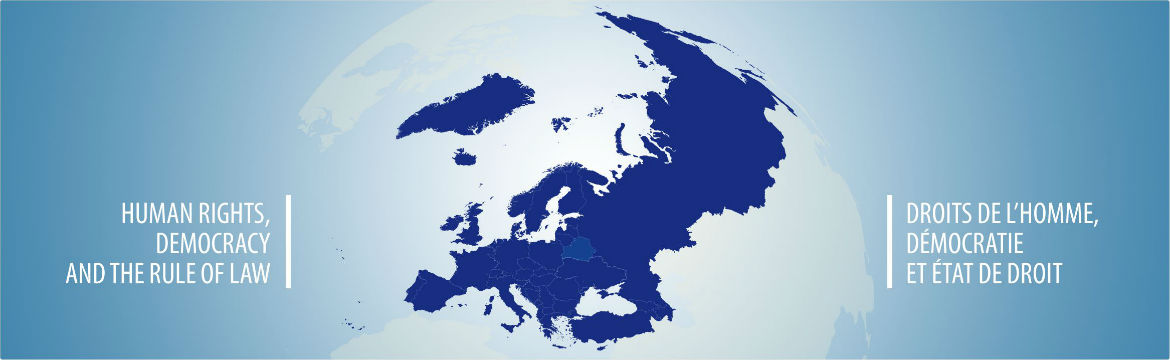
The Council of Europe is an international intergovernmental organisation which is located in Strasbourg, France and has currently 45 democratic states as its members. (The Council of Europe should not be confused with the European Union. The two organisations are quite distinct. The 28 European Union Member States, however, are all members of the Council of Europe.)
Any European State can become a member of the Council of Europe provided, it accepts the principle of the rule of law and guarantees human rights and fundamental freedoms to everyone under its jurisdiction.
to protect human rights, pluralist democracy and the rule of law;
to promote awareness and encourage the development of Europe’s cultural identity and diversity;
to seek solutions to problems facing European society (discrimination against minorities, xenophobia, intolerance, environmental protection, human cloning, Aids, drugs, organised crime, etc.);
to help consolidate democratic stability in Europe by backing political, legislative and constitutional reform.
The Council of Europe covers all major issues facing European society other than defence. Fields of activity: human rights, media, legal co-operation, social cohesion, health, education, culture, heritage, sport, youth, local democracy and transfrontier co-operation, the environment and regional planning.
Decision-making bodies and statutory organs
The Committee of Ministers is the Council of Europe’s decision-making body, and is composed of the Foreign Affairs Ministers of all the Member States (or their Permanent Representatives).
The Parliamentary Assembly is the organisation’s deliberative body, the members of which are appointed by national Parliaments.
The Congress of Local and Regional Authorities of Europe is a consultative body representing local and regional authorities.
BPW’s Representative: Giuseppina Bombaci
Women Watch is a central gateway to information and resources on the promotion of gender equality and the empowerment of women throughout the United Nations system, including the United Nations Secretariat, regional commissions, funds, programmes, specialized agencies and academic and research institutions. It is a joint United Nations project created in March 1997 to provide Internet space for global gender equality issues and to support implementation of the 1995 Beijing Platform for Action. Since 1997 the intergovernmental mandate has expanded, for example through the outcome document of the Twenty-third special session of the General Assembly in June 2000 and Security Council resolution 1325 of October 2000. The website now also provides information on the outcomes of, as well as efforts to incorporate gender perspectives into follow-up to global conferences.
Women Watch is an inter-agency website and a good practice example of United Nations coordination and collaboration. It was founded by the Division for the Advancement of Women (DAW), United Nations Development Fund for Women (UNIFEM) and United Nations International Research and Training Institute for the Advancement of Women (INSTRAW). Funding for WomenWatch was provided by DFID, The United Nations Foundation, DAW, UNIFEM, ILO, UNESCO, UNDP, UNICEF and World Bank. WomenWatch is managed by the Interagency Network on Women and Gender Equality (IANWGE), whose website can also be found on WomenWatch. The Division for the Advancement of Women is the Task Manager. The website is supervised by a voluntary Management Committee which is comprised of a Policy Advisory Group (currently comprised of the Gender Focal Points in DPI, FAO, ILO, ITU, the Regional Commissions Office, UNDP, UNFPA, UNIFEM, INSTRAW and DAW) which meets once a year and a working level Management Group which works with the Division for the Advancement of Women on regular maintenance and improvement of the website. Currently funding is provided by DAW, FAO, ILO, UNDP, UNFPA, WFP, WIPO and World Bank.
19 January 2011, NEW YORK – BPW International was elected to board of CONGO today at its 24th General Assembly. Eva Richter, UN Permanent Representative, New York and Elizabeth Vanardenne, UN (Alt) Representative, attended the meeting on behalf of BPW International. For over 50 years, The Conference of NGOs in Consultative Relationship with the United Nations (CoNGO) has been actively promoting the involvement of NGOs in the working of the United Nations. Women hardly ever fight the world’s wars, but often suffer the most and are targets of systematic sexual violence. And yet, they are barely present in peace negotiations.
The objective of the World Summit on the Information Society (WSIS) is to formulate a common vision and understanding of the global information society. It is expected to adopt a Declaration of Principles and an Action Plan to facilitate the effective growth of the Information Society and to help bridge the digital divide. It is also regarded as an effective means to assist the United Nations in fulfilling the goals of the Millennium Declaration. The Summit will be held in two phases: Geneva from December 10-12, 2003, and Tunis in 2005.